Bio
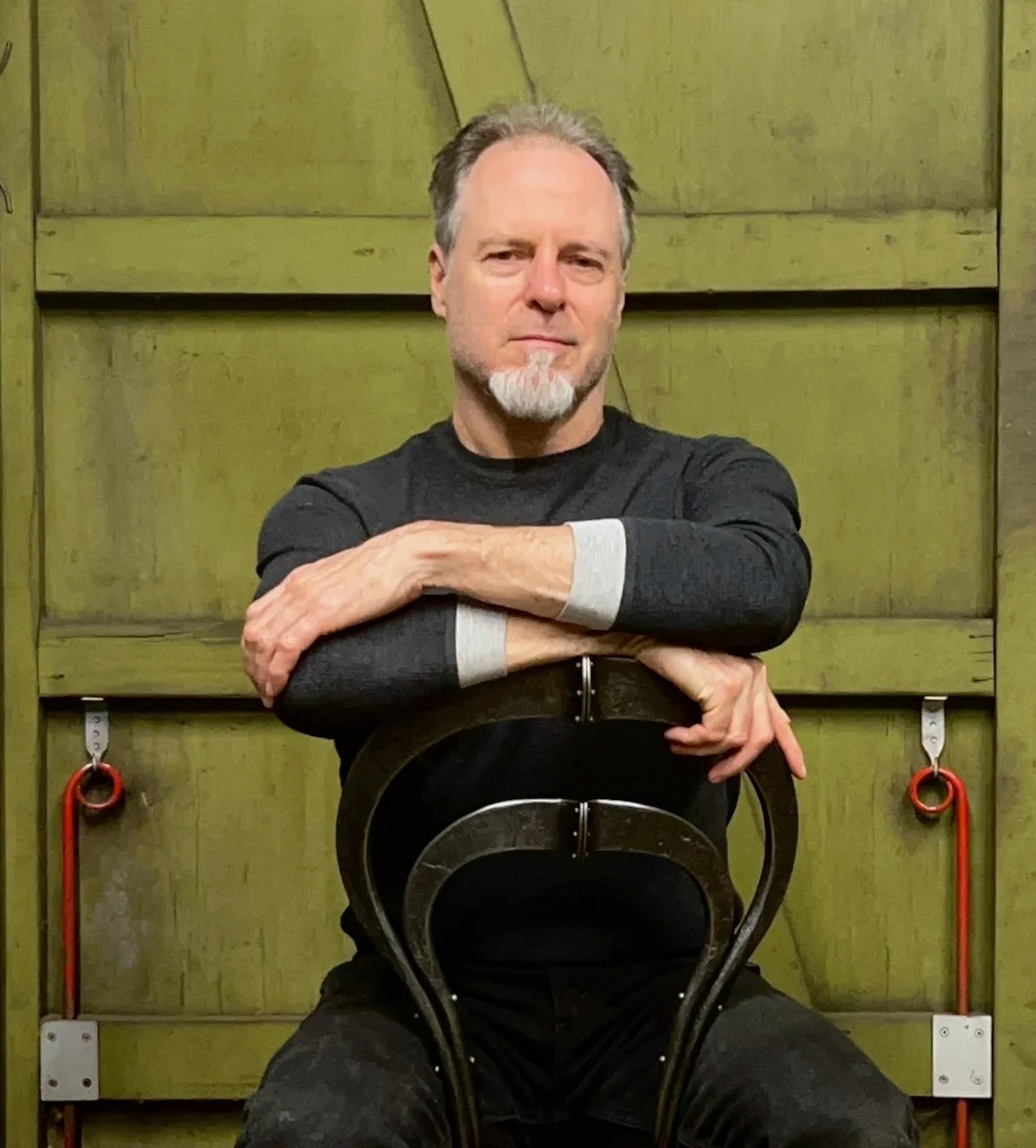
Chris Shea designs and creates furniture and architectural metalwork at his studio in southern Maryland, outside Washington, DC. His work is included in the permanent collection of the Smithsonian American Art Museum's Renwick Gallery and in numerous private collections. Shea's work has also been shown at Fuller Craft Museum, Woodson Art Museum, Houston Center for Contemporary Craft, the National Ornamental Metals Museum, The Society of Arts and Crafts in Boston, Gunston Hall historic site in Virginia, Wexler Gallery in Philadelphia, and at SOFA Chicago with Maurine Littleton Gallery. A native of Marblehead, MA, Shea studied at the Appalachian Center for Craft in Tennessee and at Penland School. He holds a BA in English Literature from Cornell University. Before becoming a metalsmith, he spent five years as education coordinator at The Shakespeare Theatre in Washington, DC. Chris Shea's glasswork is created in association with the talented artists of the Washington Glass Studio.
Artist Statement
Growing up in a historic town on the coast of Massachusetts, I received an early education in the eloquence of even simple things. Objects were saturated with history. Colonial-era homes and household things — a chair, a cooking spoon, an artisan's tool — held traces of the people who had made them and lived with them. Some objects were spare and utilitarian, others were grand and beautifully crafted. All of them had the capacity to evoke a sense of wonder and connectedness. To those experiences I can trace my beginnings as a metalsmith and furniture maker, though it took me 30 years and a detour through literary aspirations to find my path.
From the woods and shorelines of my childhood I developed an admiration for insects, crustaceans, and other creatures that has never left me. And since I first began to explore my chosen materials of iron, bronze, and copper an affinity between the weird exoskeletal beauties that I wondered at as a child and the languages of forged metalwork has been inescapable. The material and technical vocabulary that metalsmiths have developed over time to address challenges of form and function seem to me to have intriguing echoes in the ways that evolution has, for certain creatures, worked to solve the practical problems of living on Earth. In both cases, strange and elegant solutions have arisen.
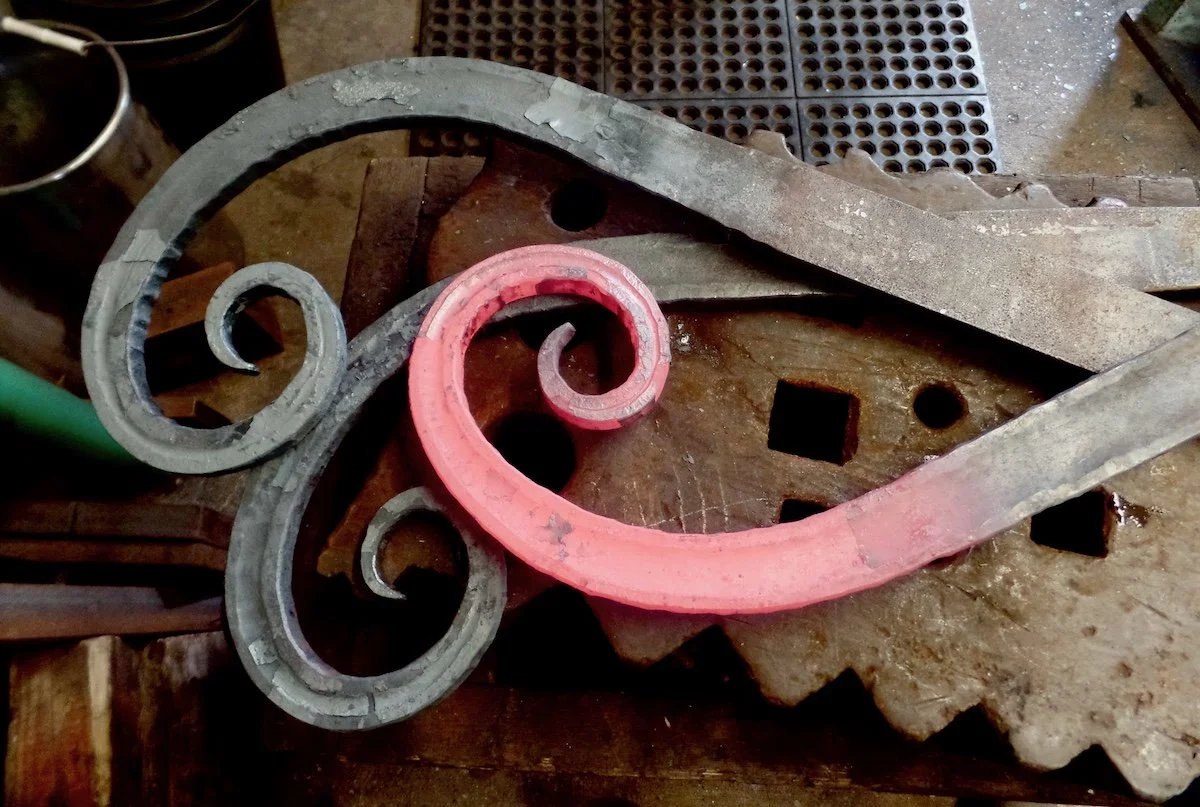
The visceral sense of wonder I feel in contemplating the long workings of evolution and its spectacular, varied results is echoed in my own work with fire, hammer, and anvil. In my studio, traditional forms of furniture and functional metalwork evolve into new anatomies, drawn from the world around me, both natural and man-made, and expressed in the language of the blacksmith.